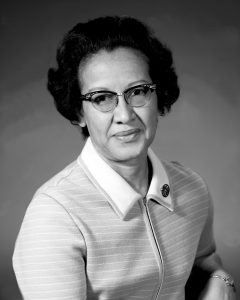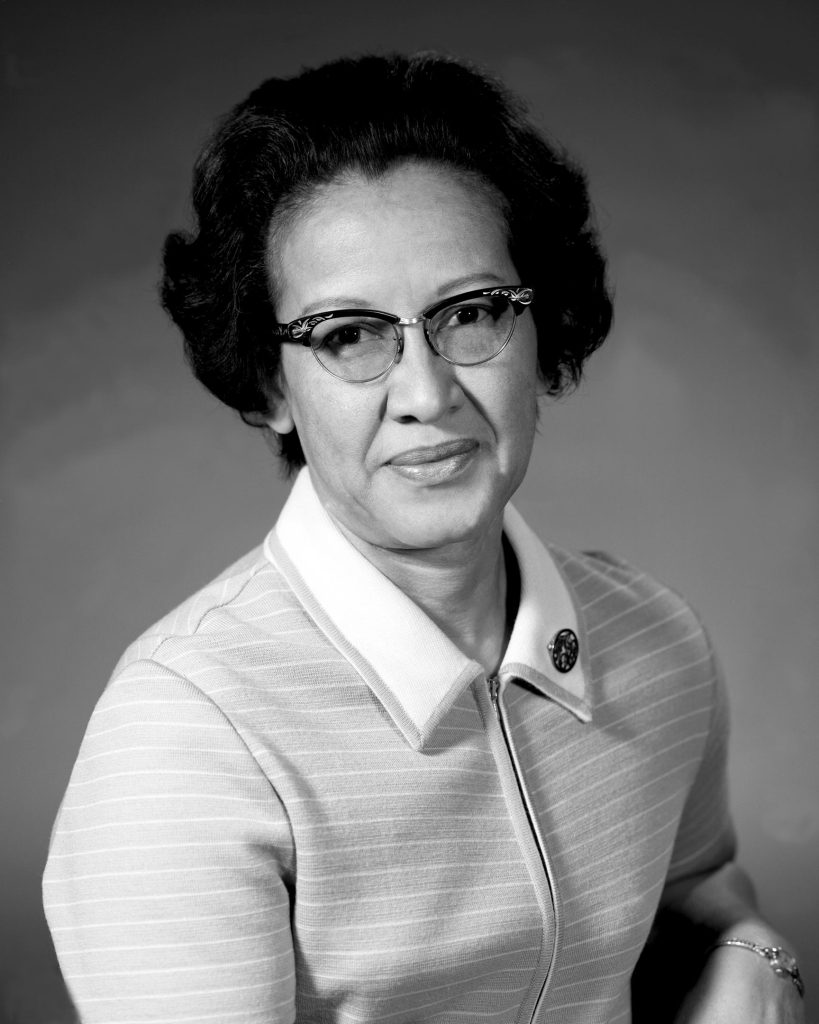
Katherine Johnson graduated from historically Black West Virginia State College at just 18 years old with degrees in mathematics and French. She joined the National Advisory Committee for Aeronautics (NACA, later NASA) in 1953 as one of the agency’s “human computers” — a team of Black women who performed complex calculations by hand that were essential to early American aerospace.
Her mathematical precision was so respected that when NASA transitioned to electronic computers for John Glenn’s Friendship 7 orbital mission in 1962, Glenn refused to fly until Johnson personally verified the computer’s calculations. Her numbers matched. He flew.
Johnson’s contributions were foundational to the Apollo program. Her orbital mechanics work helped put the first Americans on the Moon and brought the Apollo 13 crew home safely after a catastrophic failure in space. For decades her name appeared in no major textbooks. NASA named a computational research facility after her in 2016. She was awarded the Presidential Medal of Freedom the same year. She was 97 years old.
We will not let her story be a footnote.